Why YNOVA lets learners think beyond English
YNOVA learning design team · 26 September 2026 · 9 min read

Imagine a familiar moment in an English classroom.
A teacher asks:
“Why do you think traditional festivals are still important to young people?”
The student pauses.
“Because…it is…嗯……就是一家人终于可以聚在一起……”
Then comes the familiar:
“Sorry. I don’t know how to say it in English.”
But the learner does know what they want to say. They may want to explain that their family members live in different cities and festivals provide a rare opportunity for everyone to come home and spend time together.
The problem is not a lack of ideas.
What the learner can currently say in English does not fully represent what they can think, know, and mean.
For teachers in multilingual classrooms, this can be difficult too. When a learner suddenly switches to Thai, Japanese, Arabic, Chinese, or French, the teacher may not understand the language well enough to access the idea behind it.
At YNOVA, this familiar classroom moment led us to a design question:
What if AI could help bridge what learners already mean and what they are learning to say in English?
This is the thinking behind YNOVA's bilingual scaffolding.
The theory behind our design: Translanguaging
Our design is informed by translanguaging.
The term may sound technical, but the basic idea is simple: multilingual learners do not necessarily use their languages as completely separate systems. They can draw flexibly on their full linguistic repertoire to think, understand, learn, and communicate (García & Li, 2014; Li, 2018).
For example, a Thai learner might read a speaking question in English, develop an idea in Thai, connect that idea with new English expressions, and eventually answer in English.
From this perspective, the learner's home language is not necessarily an interference with English learning. It can become a resource for building towards English.
Pedagogical translanguaging takes this idea into instructional design. Rather than simply allowing learners to switch languages freely, teachers deliberately create opportunities for multilingual resources to support learning (Cenoz & Gorter, 2020).
That distinction is important to us.
YNOVA is not designed to translate everything. Instead, we ask when and why another language can help a learner take the next step in English.
Pedagogical translanguaging: Stance-design-shift
García et al. (2017) offer another useful way to think about translanguaging pedagogy through three ideas: stance, design, and shift.
We find this framework particularly relevant for AI learning design.
Stance is about how we see the learner.
Instead of treating the learner's home language as something that should disappear during English learning, we recognise multilingual resources as assets. A learner who can explain a sophisticated idea in Thai but not yet in English does not lack the idea—they need support to build the English resources for expressing it.
Design asks how that belief becomes part of the learning experience.
If we genuinely see multilingual resources as useful, learners need purposeful opportunities to use them. In YNOVA, this means designing moments where learners can ask questions in their home language, develop ideas bilingually, and access home-language explanations when connecting their meanings with new English vocabulary.
Shift reminds us that scaffolding should be responsive.
Learners do not need the same bilingual support all the time. At one moment, a learner may need to explain an idea in Japanese. At another, they may only need a brief French explanation of a new phrase. Later, they may be ready to speak independently in English.
For an AI tutor, this is particularly interesting: bilingual support does not have to be a permanent “mode.” It can respond to what the learner needs at a particular moment in the learning process.
Together, these ideas give us a simple design logic:
STANCE: What resources does this learner already have?
DESIGN: How can we intentionally mobilise those resources for learning?
SHIFT: When should support change, reduce, or move back towards independent English use?
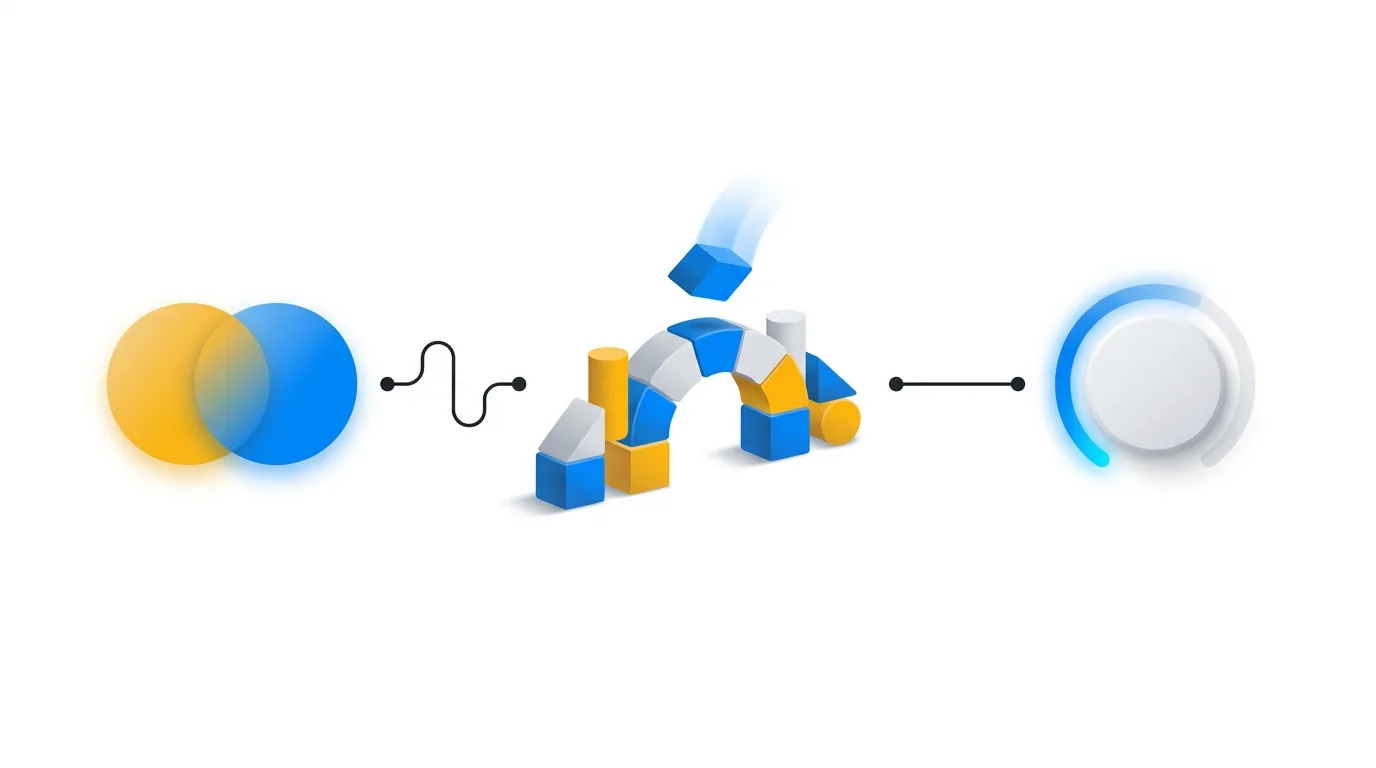
These questions sit behind several bilingual features we are developing in YNOVA.
1. Ask in the language you have. Learn the English you need.
Imagine an Arabic-speaking learner wants to know how to express a complex idea in English—but does not have enough English to even ask the question.
This creates a strange barrier: you need English to ask for help with the English you don't know.
In YNOVA's Teacher Mode for Practice, learners can therefore ask questions in their home language.
The AI tutor can understand the learner's intended meaning and help them move towards an appropriate English expression.
Here, bilingual support serves access.
The home language is not the destination. It provides an entry point to further English learning.
2. Think first. Then build the English.
We apply the same principle during Training.
Speaking requires learners to do more than retrieve vocabulary. They need to recall experiences, generate ideas, decide what matters, and organise what they want to say.
But sometimes learners simplify their ideas simply because they do not yet have the English to express them.
Consider a Thai learner preparing to talk about Songkran. Instead of immediately struggling to produce:
“Songkran is important because…family…together…”
YNOVA can allow the learner to first develop the idea in Thai:
“สำหรับฉัน สงกรานต์ไม่ได้สำคัญแค่เพราะเป็นเทศกาล แต่เป็นช่วงเวลาที่ครอบครัวซึ่งปกติอยู่กันคนละที่ได้กลับมาเจอกัน”
The learner now has a richer idea to work with.
YNOVA's job is not simply to translate it into a polished answer.
The next step is to help the learner build English from their own meaning.
3. Connect new English to meanings learners already understand
Once learners have developed their ideas, YNOVA recommends vocabulary and expressions relevant to what they actually want to say.
Where useful, these English resources can come with explanations in the learner's home language.
For a French-speaking learner:
- family reunion
- réunion de famille
- a rare opportunity
- une occasion rare
For an Arabic-speaking learner:
- get together
- يجتمعون / يلتقون معًا
The goal is not simply to show learners “better vocabulary”.
It is to create a connection:
This is what I wanted to mean → this is an English resource I can use to express it.
This cross-linguistic bridge can help learners connect new English with knowledge they already possess.

4. Personalise the language—not just the difficulty level
There is another resource learners bring into speaking practice: their cultural experience.
This is why YNOVA can also draw on information such as learners' first language and home-country background when generating examples and language support.
A learner from Thailand discussing celebrations might find Songkran relevant. A Japanese learner might draw on お正月 or a local matsuri. An Arabic-speaking learner might choose Eid. Another learner may choose something completely different.
The goal is not to assume that nationality determines experience.
Instead, cultural background gives AI possible starting points for contextualisation, while learners remain the owners of their stories.
This becomes particularly important when generative AI starts producing sentences.
Rather than giving every learner the same polished model answer, YNOVA aims to generate language around the ideas and experiences the learner has already contributed.
The English can be scaffolded.
But the meaning still belongs to the learner.
From bilingual support to independent speaking
Together, these features follow a simple learning trajectory:
- AccessUse the home language when English prevents the learner from accessing help.
- DevelopAllow multilingual resources to support richer idea generation.
- BridgeConnect learner-generated meanings with relevant English vocabulary and expressions.
- ProduceMove towards guided and increasingly independent English speaking.

Or, more simply:
What I already mean → What I am learning to say → What I can eventually say myself.
This is also where shift becomes particularly important. Good bilingual scaffolding should not simply accumulate more support. It should know when that support has done its job.
The purpose is not to keep learners dependent on their home language. It is to mobilise multilingual resources strategically and then create opportunities for learners to retrieve, practise, and produce English themselves.
This is why we do not think good bilingual AI means translating everything.
A translation feature asks:
“How can I give this learner the meaning in another language?”
A learning scaffold asks:
“What support does this learner need now so they can do more independently in English next?”
That is the question behind YNOVA's bilingual design.
Generative AI is already remarkably good at speaking for learners.
We are more interested in another possibility:
Can AI help learners say more of what they actually mean—using the knowledge, languages, and experiences they already have—until they can increasingly say it in English on their own?
That is the kind of bilingual AI tutor we want to build at YNOVA.
References
- Cenoz, J., & Gorter, D. (2020). Pedagogical translanguaging: An introduction. System, 92, 102269.
- García, O., Johnson, S. I., & Seltzer, K. (2017). The translanguaging classroom: Leveraging student bilingualism for learning. Caslon.
- García, O., & Li, W. (2014). Translanguaging: Language, bilingualism and education. Palgrave Macmillan.
- Li, W. (2018). Translanguaging as a practical theory of language. Applied Linguistics, 39(1), 9-30. https://doi.org/10.1093/applin/amx039
Try NOVA
NOVA coaches IELTS Speaking in your own language, then steps back as you get stronger.